Synchronized Data Streams Connecting Promotional Credits to Live Event Payouts in Portable Gaming Leagues
Viktor Krüger · Jun 7, 2026
Synchronized Data Streams Connecting Promotional Credits to Live Event Payouts in Portable Gaming Leagues
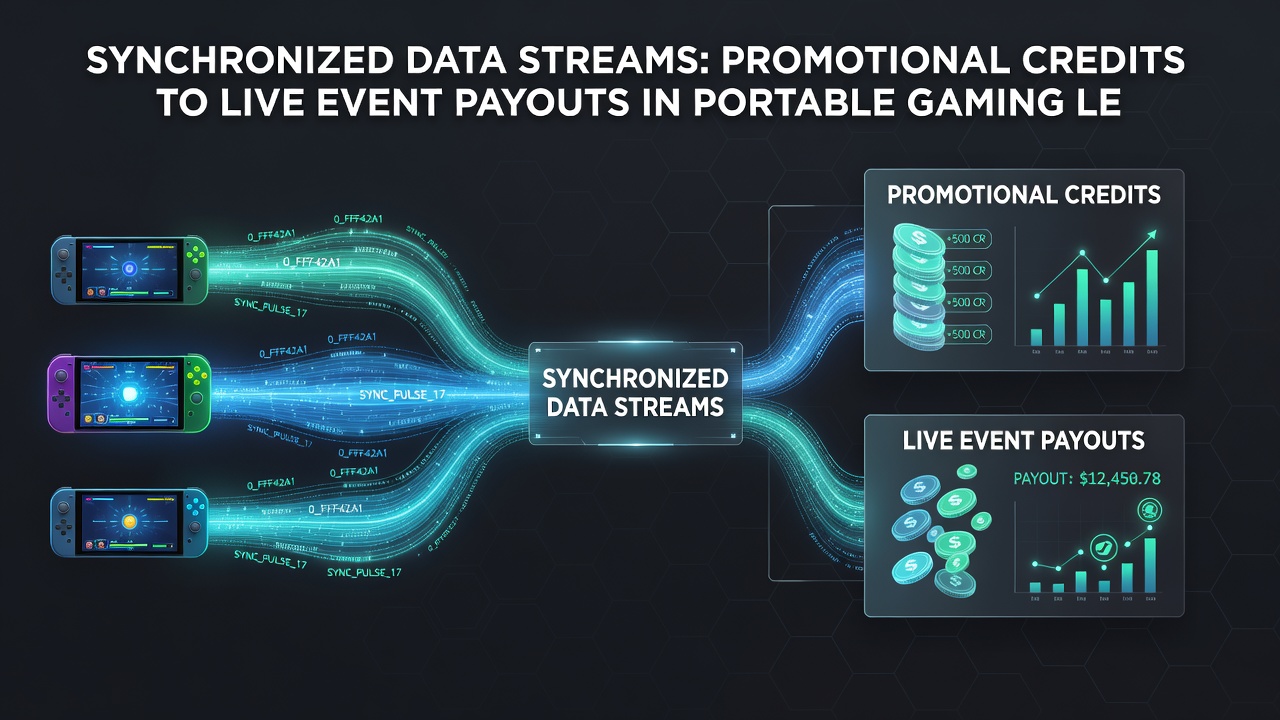
Portable gaming leagues rely on synchronized data streams that link promotional credits directly to live event payouts through integrated platforms and real-time processing networks. These systems coordinate user accounts, bonus allocations, and prize distributions across mobile devices while maintaining accuracy during tournaments and competitive matches.
Data Stream Architecture in Mobile Leagues
Developers build data stream architecture using APIs and cloud-based servers that update continuously as players earn credits or trigger payout events. When a promotional credit activates in a league match the system records the event and routes it through validation layers before any funds transfer occurs. Research from the University of Nevada, Reno indicates that such architectures reduce processing delays by coordinating multiple data points simultaneously across handheld devices and central servers.
Live event payouts depend on these same streams because they pull verified information from player performance logs and credit balances in one continuous flow. Observers note that leagues operating in June 2026 adopted enhanced protocols to handle higher volumes during peak tournament periods, and those updates allowed credits earned mid-match to convert into immediate prize eligibility without separate manual checks.
Promotional Credit Triggers and Transaction Timing
Promotional credits activate through predefined rules such as login streaks, achievement milestones, or referral completions, and the synchronized streams capture each trigger at the moment it occurs. The data then travels to payment processors where algorithms match the credit value against available tournament pools. This process ensures that funds reach winners promptly once an event concludes, while compliance checks run in parallel on the same data pipeline.
Those who have examined transaction logs in portable esports circuits report that timing synchronization prevents mismatches between credited amounts and actual payouts. In practice a player who receives a bonus during a live round sees that amount reflected in their payout calculation within seconds of the match ending because the stream maintains a single source of truth for all related records.
Support Networks and Real-Time Validation
Customer assistance teams access the same synchronized streams to resolve discrepancies when they arise during live events. Support staff query the data in real time to confirm whether a promotional credit applied correctly or if a payout requires adjustment. This coordination between service channels and payment pathways reduces downtime for players and keeps tournament flows uninterrupted.
Industry reports from the Interactive Games and Entertainment Association highlight how Australian mobile platforms integrated these validation loops in 2025, and the approach expanded to additional regions by June 2026. The result appears in faster resolution times for bonus-related queries because support personnel work from the identical dataset that drives the payouts themselves.
Security Measures Within the Streams
Encryption standards protect the data as it moves between promotional systems and payout processors, and tokenization further secures credit identifiers during transfers. Leagues implement multi-factor authentication at key synchronization points to verify that only authorized accounts can access or modify stream contents. These layers operate continuously so that any attempt to alter credit values triggers immediate alerts across the network.
Portable gaming environments therefore maintain audit trails that document every credit activation and payout release. Regulatory frameworks in Canada and parts of the European Union require such documentation, and platform operators comply by embedding logging functions directly into the synchronized data architecture.
Future Developments and League Adoption
Additional leagues plan to expand stream capabilities with machine learning models that predict credit usage patterns and optimize payout timing ahead of major events. The models draw from historical data collected across multiple seasons, and they adjust parameters automatically when tournament schedules change. Observers expect continued refinement through the remainder of 2026 as more portable platforms adopt these predictive elements.
Conclusion
Synchronized data streams form the operational backbone that connects promotional credits to live event payouts in portable gaming leagues. The architecture, timing coordination, support integration, and security protocols work together to deliver accurate and timely results across mobile environments. As leagues continue to refine these systems in June 2026 and beyond, the connections between credits and payouts remain central to maintaining smooth competitive play.