Payment Gateway Latencies and Their Influence on In-Play Decision Making Across Mobile Tournament Formats
Kai Koch · Aug 7, 2026
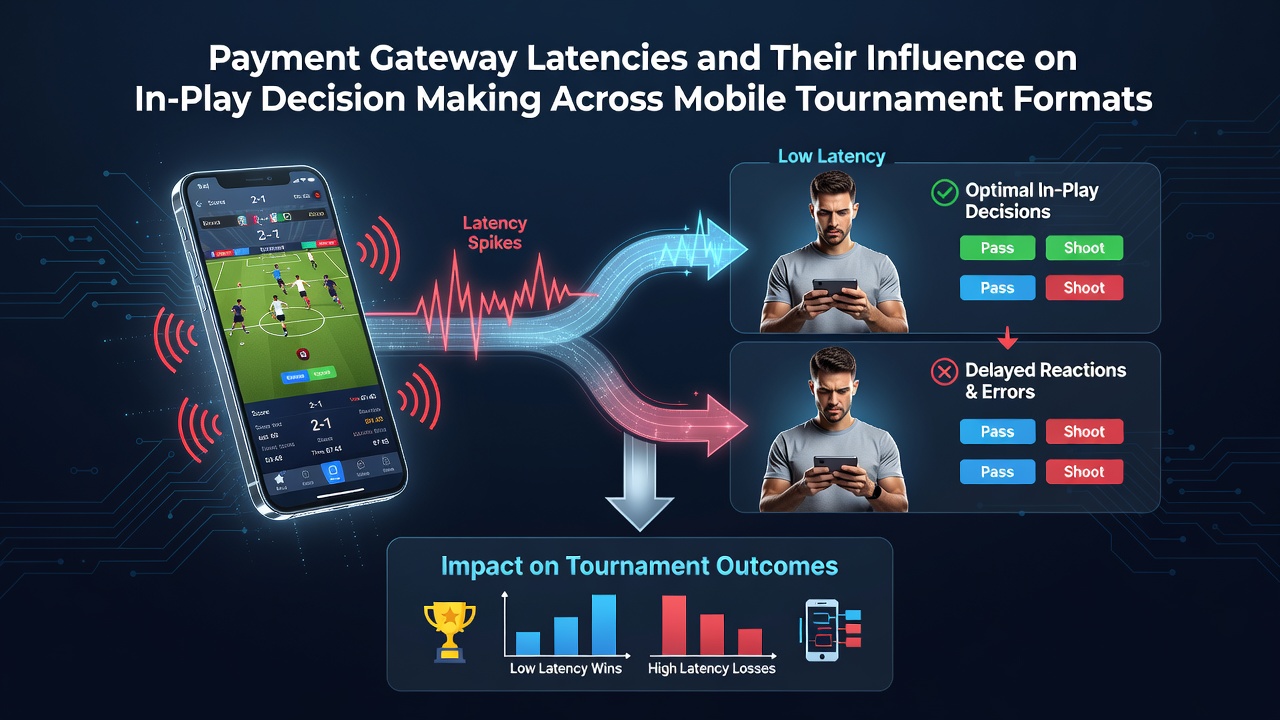
Payment Gateway Latencies and Their Influence on In-Play Decision Making Across Mobile Tournament Formats
Data from mobile gaming platforms in August 2026 shows that payment gateway latencies continue to shape how participants handle real-time choices during tournament play, especially when deposits or bonus activations occur mid-event. Observers note that even brief delays in transaction confirmation can alter strategies in formats like mobile esports brackets and poker sit-and-gos, where timing directly ties to prize pools and opponent positioning.
Researchers at various institutions have tracked average gateway response times across different regions, finding variations that range from under 200 milliseconds in optimized networks to several seconds during peak loads. These differences matter because in-play decisions often hinge on immediate access to funds or verified credits, and any lag disrupts the flow of actions such as adding chips or claiming live promotions.
Core Mechanics of Gateway Performance in Tournament Settings
Payment gateways process authorization requests through multiple layers that include encryption checks, fraud screening, and bank communication, and each step adds measurable time to the overall cycle. In mobile tournament environments, where users switch between viewing live feeds and managing balances, these layers determine whether a deposit lands before the next round starts or after a critical hand has already played out. Studies indicate that systems using tokenization and cached verification tend to reduce total latency by 30 to 40 percent compared with older sequential methods.
Platform operators have documented cases where high-traffic periods in August 2026 produced measurable spikes in confirmation times, particularly during cross-border events that pull participants from multiple time zones. The resulting pauses force players to adjust their risk calculations on the fly, sometimes abandoning intended moves because the required funds remain pending.
Effects on Decision Patterns in Different Tournament Structures
Across esports mobile circuits, latency influences how teams coordinate resource allocation during ongoing matches, while in poker-based tournaments teh same delays affect individual choices about rebuy options or side bets. Data shows that formats with shorter blind levels or faster round timers experience sharper impacts, as participants cannot afford to wait several seconds for balance updates before committing to an action. Those who study these patterns report that users develop workarounds such as pre-loading smaller amounts or using multiple linked accounts, yet these habits still leave gaps when sudden opportunities arise.
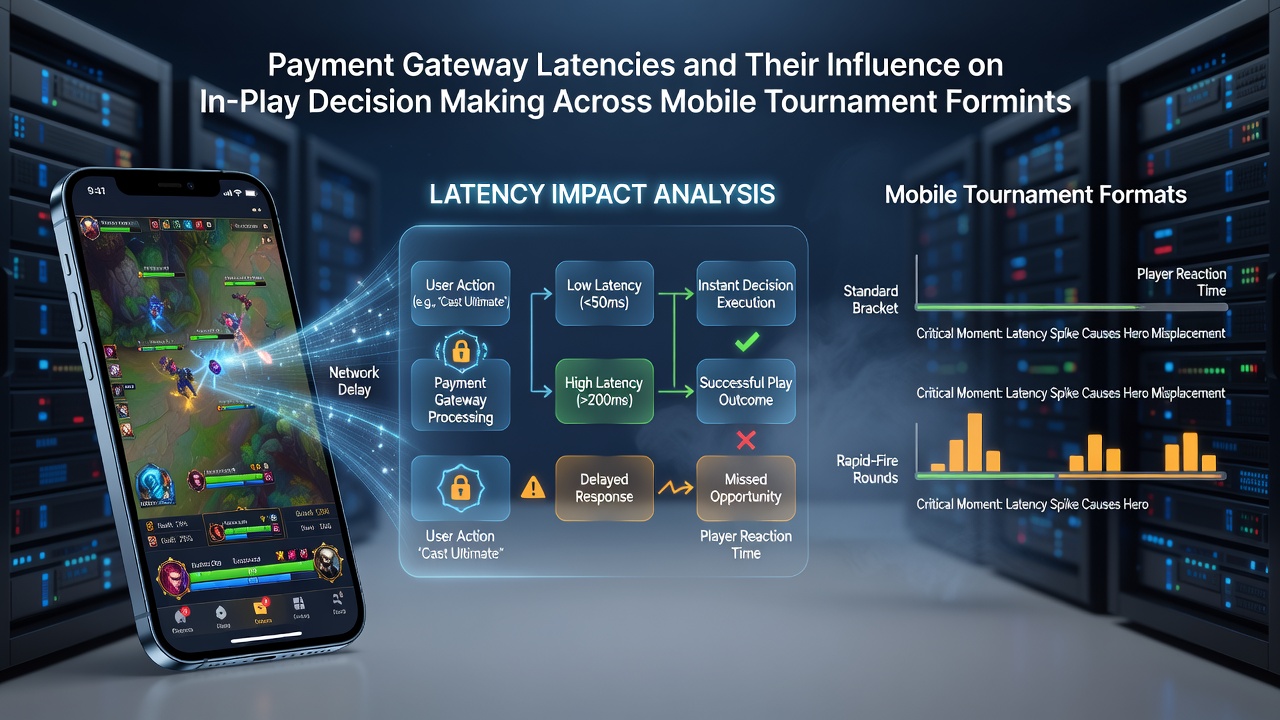
One study revealed that players facing consistent sub-second latencies maintain higher engagement rates and complete more in-play transactions per session than those encountering longer waits. The pattern holds across both solo and team-based mobile events, suggesting that gateway speed functions as a hidden variable in overall performance metrics.
Regional Infrastructure and Its Role in 2026 Trends
Networks in North America and parts of Asia-Pacific demonstrated lower average latencies during the summer 2026 tournament calendar, according to aggregated platform logs, while certain European routes showed greater variability tied to regulatory compliance checks. Industry reports from groups such as the American Gaming Association highlight how 5G rollout and edge computing deployments have narrowed some of these gaps, yet mobile users still encounter inconsistencies when roaming between carriers. Participants in regions with stronger infrastructure report fewer forced strategy shifts caused by pending transactions.
Academic work from institutions tracking digital transaction flows notes that combining local payment rails with global gateways can further compress processing windows, allowing tournament software to reflect updated balances almost instantly. This matters most in formats where prize structures escalate rapidly, because delayed credits can mean missing eligibility windows for larger payouts.
Support Systems and Real-Time Coordination
Customer assistance teams at major platforms now monitor gateway queues in parallel with tournament servers, stepping in when confirmation times exceed defined thresholds. Their interventions include manual balance adjustments or temporary credit extensions that keep play moving while backend processes finish. Figures from operator dashboards indicate that such coordinated responses reduce player drop-off rates during high-stakes mobile events by noticeable margins.
Those who analyze these workflows find that predictive alerts sent to users about expected delays help maintain trust and reduce support ticket volume, even when actual latencies remain unchanged. The approach works because it gives participants advance notice to adapt their in-play plans rather than discovering the issue only after attempting a transaction.
Conclusion
Payment gateway latencies remain a measurable factor in how mobile tournament participants execute in-play decisions, with documented effects on timing, strategy adjustments, and overall session continuity. As infrastructure improvements continue and support mechanisms evolve, the relationship between transaction speed and competitive outcomes stays central to platform design across different tournament formats. Ongoing data collection through 2026 and beyond will clarify how these technical elements continue to intersect with user behavior in real time.