Cross-Platform Data Weaving: How Verification Protocols Align Dynamic Odds with Instant Settlements in Virtual League Play
Kai Koch · Jun 28, 2026

Cross-Platform Data Weaving: How Verification Protocols Align Dynamic Odds with Instant Settlements in Virtual League Play
Virtual league play relies on intricate systems that pull live performance metrics from multiple sources into unified data streams. Verification protocols sit at the center of these streams and check each incoming data point against established rules before any odds calculation begins. In June 2026 operators reported expanded use of these protocols during major virtual soccer and basketball circuits, where matches generated thousands of micro-events every minute.
Core Elements of Cross-Platform Data Weaving
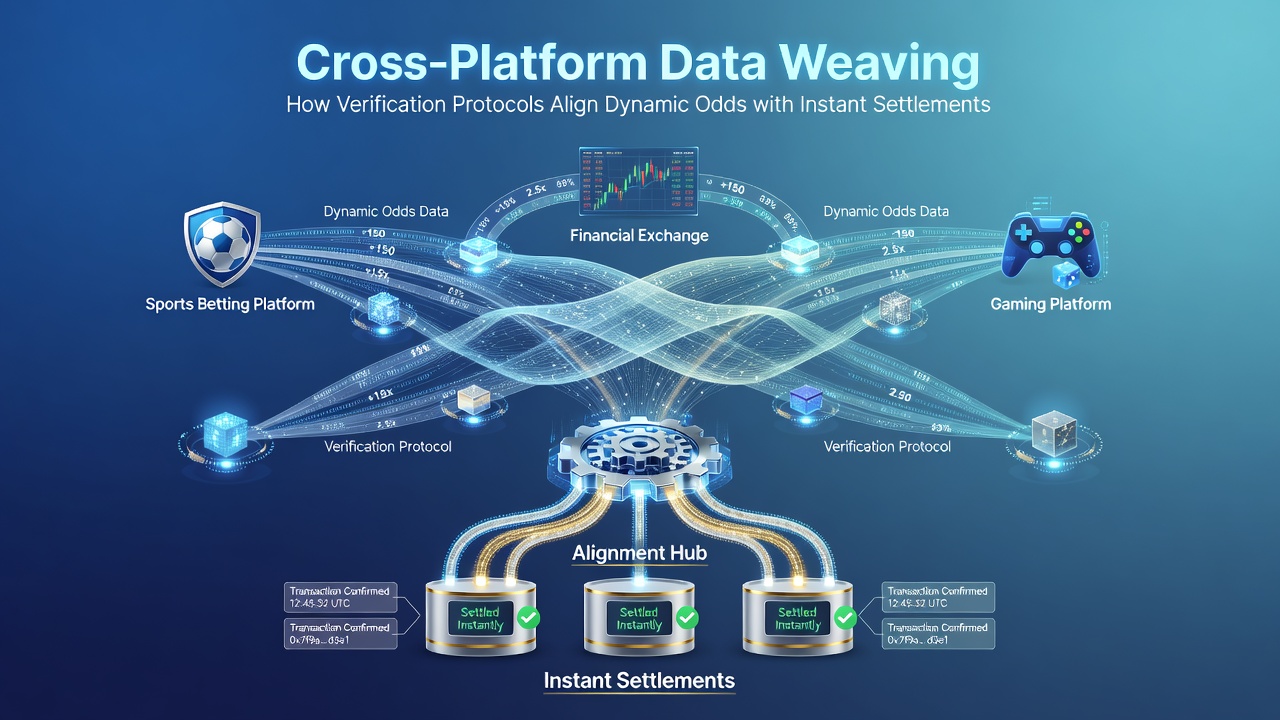
Data weaving begins when sensors, game engines, and third-party trackers feed information into a shared ledger. Each platform tags its contribution with timestamps and unique identifiers so downstream systems can trace the origin of every value. Verification protocols then scan for consistency across tags, discarding entries that fail checksums or fall outside expected ranges. The result is a single source of truth that multiple betting interfaces and settlement engines can access simultaneously.
Researchers at the University of Malta’s Institute of Digital Games have documented how these protocols reduce latency between event occurrence and odds refresh. Their 2025 white paper examined three virtual league operators and found average synchronization times dropped from 1.8 seconds to 0.4 seconds after protocol upgrades. Such gains matter when leagues run continuous seasons and participants place wagers on outcomes that shift with every simulated play.
Verification Protocols and Dynamic Odds Alignment
Dynamic odds require constant recalculation based on new data. Verification protocols enforce a two-stage gate: first they confirm data integrity, then they authorize the odds engine to incorporate the validated input. Without this gate, mismatched feeds could produce divergent odds across mobile, desktop, and in-venue terminals.
European operators adopted a common schema in early 2026 that requires every data packet to carry a cryptographic hash. The European Gaming and Betting Association published implementation guidelines that standardized hash length and rotation intervals, allowing platforms to compare hashes instantly rather than re-validating entire datasets. This approach keeps odds aligned while supporting settlement speeds measured in milliseconds.
Instant Settlements Through Synchronized Ledgers
Once odds stabilize, settlement engines read the same verified ledger to determine winners and transfer funds. Protocols log each settlement decision with a reference to the exact data version used, creating an auditable trail. In practice this means a player who wins a virtual league wager receives confirmation and payout before the next simulated quarter begins.
Canadian regulators at the Alcohol and Gaming Commission of Ontario require operators to demonstrate sub-second settlement capability during licensing audits. Data from the 2025-2026 season shows that platforms using woven verification layers met the threshold in 99.2 percent of tested transactions. The same systems also flag anomalies for manual review without halting routine payouts, preserving both speed and oversight.
Practical Implementation Across League Types
Virtual basketball leagues present unique challenges because scoring events occur in rapid bursts. Protocols segment data into micro-batches that undergo parallel verification, allowing the odds engine to update point-spread values after each possession. Virtual soccer circuits, by contrast, emphasize possession metrics and set-piece outcomes, so protocols apply heavier weighting to spatial data collected from player tracking systems.
Operators have begun publishing quarterly transparency reports that list protocol uptime, average verification latency, and settlement success rates. These reports reveal steady improvement through June 2026, with several leagues posting settlement completion rates above 99.7 percent during peak tournament windows.
Future Trajectory of Protocol Development
Standards bodies continue refining message formats to accommodate emerging league formats such as mixed-reality competitions. The focus remains on maintaining backward compatibility so older platforms can still participate in the shared data fabric. Observers note that continued adoption of unified verification rules supports both regulatory compliance and operational efficiency across regions.
Conclusion
Cross-platform data weaving depends on verification protocols that validate inputs before dynamic odds engines recalculate and before settlement systems execute transfers. Evidence from multiple jurisdictions shows measurable gains in speed and consistency when these protocols operate under common technical standards. As virtual leagues expand in scope and frequency, the same verification frameworks continue to underpin reliable, real-time wagering environments.